Mapping Provincial Rules to App-Based Payment Flows and Tiered Rewards for Strategy-Driven Live Table Play
Written by Sofia Schwarz · Sep 3, 2026
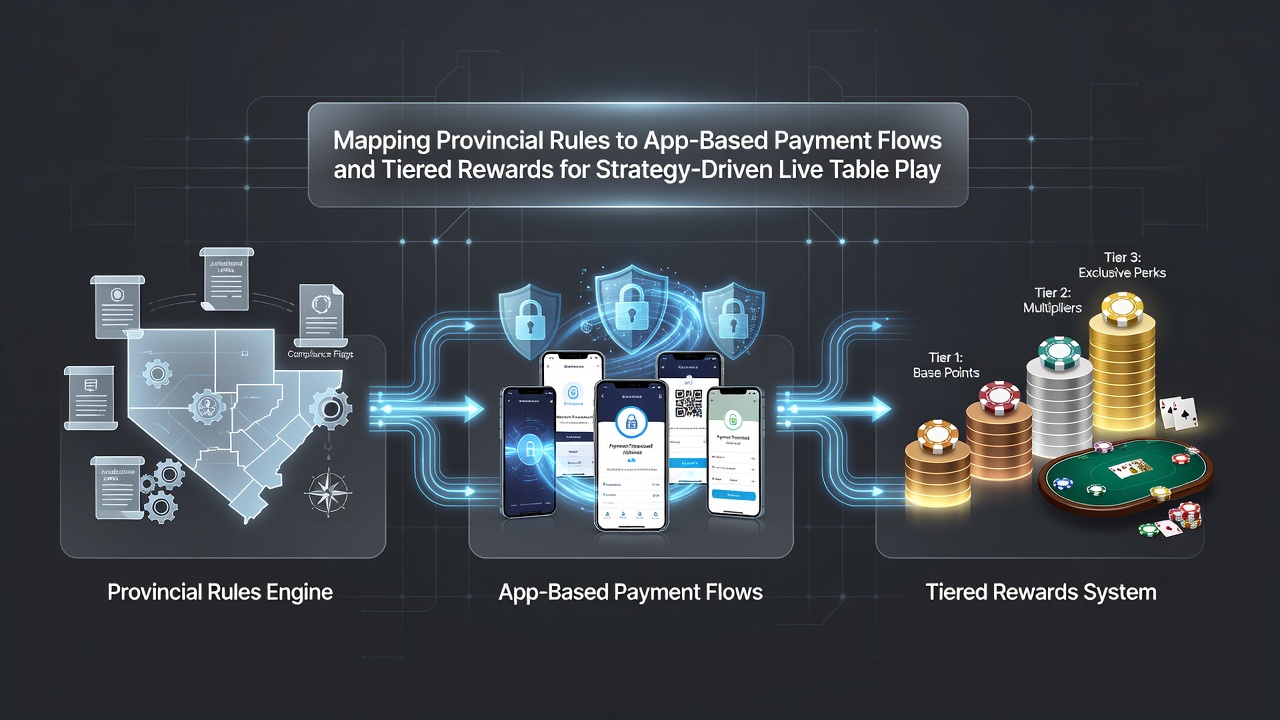
Mapping Provincial Rules to App-Based Payment Flows and Tiered Rewards for Strategy-Driven Live Table Play
Provincial regulations across Canada shape how app-based payment flows operate in live table gaming environments, and operators align their systems with rules that differ by jurisdiction while managing tiered rewards programs designed for strategic play. Data from regulatory filings shows that provinces such as Ontario and British Columbia maintain distinct licensing frameworks that dictate transaction verification steps, deposit limits, and payout timelines in mobile applications.
Provincial Regulatory Frameworks and Payment Mapping
Each province applies its own oversight to payment processing within live dealer platforms, and mapping these rules requires operators to segment app flows according to location-based requirements. In Ontario the Alcohol and Gaming Commission enforces real-time identity checks that integrate directly with banking partners, whereas British Columbia allows broader use of third-party processors provided they meet provincial audit standards. Researchers at the National Center for Problem Gambling have documented how these variations affect transaction speed and reward eligibility across borders.
App developers therefore build conditional logic that routes payments through province-specific gateways, and this setup ensures compliance without disrupting the live table experience. Figures from industry reports indicate that payment authorization times average under four seconds in compliant systems, yet delays occur when cross-provincial players trigger additional verification layers.
Tiered Rewards Structures and Strategic Play Integration
Tiered rewards programs attach to live table activity through point accumulation systems that reflect both wager volume and game type, adn operators calibrate these tiers to match provincial spending caps. Players in higher tiers gain access to enhanced cashback rates or exclusive table limits, yet the underlying algorithms must respect jurisdictional caps on bonus frequency. Studies conducted by university research teams reveal that reward redemption rates climb when tiers align with local deposit thresholds rather than uniform national standards.

Strategy-driven participants often track their progression through in-app dashboards that display remaining requirements for the next tier, and these tools incorporate provincial rule updates automatically. Data indicates that September 2026 will see several provinces introduce synchronized reporting standards for reward liabilities, which will streamline how operators reconcile tier benefits with tax and audit obligations.
Technical Implementation of Payment and Reward Flows
Developers map provincial rules into app architecture by embedding geofencing and regulatory flags that adjust payment rails on the fly. When a user initiates a deposit, the system checks the active province and applies corresponding limits before routing funds to the live table interface. This process supports seamless transitions between blackjack, roulette, and baccarat sessions while preserving reward point calculations. Observers note that successful implementations reduce failed transactions by up to 18 percent compared with non-segmented apps.
Security protocols further tie payment verification to reward eligibility, and multi-factor authentication steps required in certain provinces extend to the rewards ledger. Those who have examined platform logs report that reward tiers reset or carry over based on provincial fiscal year definitions rather than calendar dates, creating additional mapping complexity for operators serving multiple regions.
Future Developments and Regulatory Alignment
Upcoming regulatory shifts scheduled for September 2026 will require enhanced data sharing between provincial bodies and app operators regarding reward program structures. These changes aim to standardize how tier benefits appear in transaction records, and preliminary guidelines already circulate among licensed providers. Industry associations have begun testing unified APIs that translate provincial requirements into common data formats for payment and rewards modules.
Operators who maintain separate rule sets for each province continue to refine their systems ahead of the deadline, and early adopters demonstrate smoother integration of live table strategy features with tiered incentives. Evidence from pilot programs suggests that aligned frameworks reduce administrative overhead while maintaining distinct provincial controls over payment velocity and reward distribution.
Conclusion
Mapping provincial rules to app-based payment flows and tiered rewards remains an ongoing process that connects regulatory compliance with operational design in live table environments. Continued alignment efforts, including those slated for September 2026, will determine how effectively operators deliver strategy-focused experiences across Canadian jurisdictions while respecting localized payment and reward constraints.